
By Brandon D. Sears, CLU® (Chartered Life Underwriter)
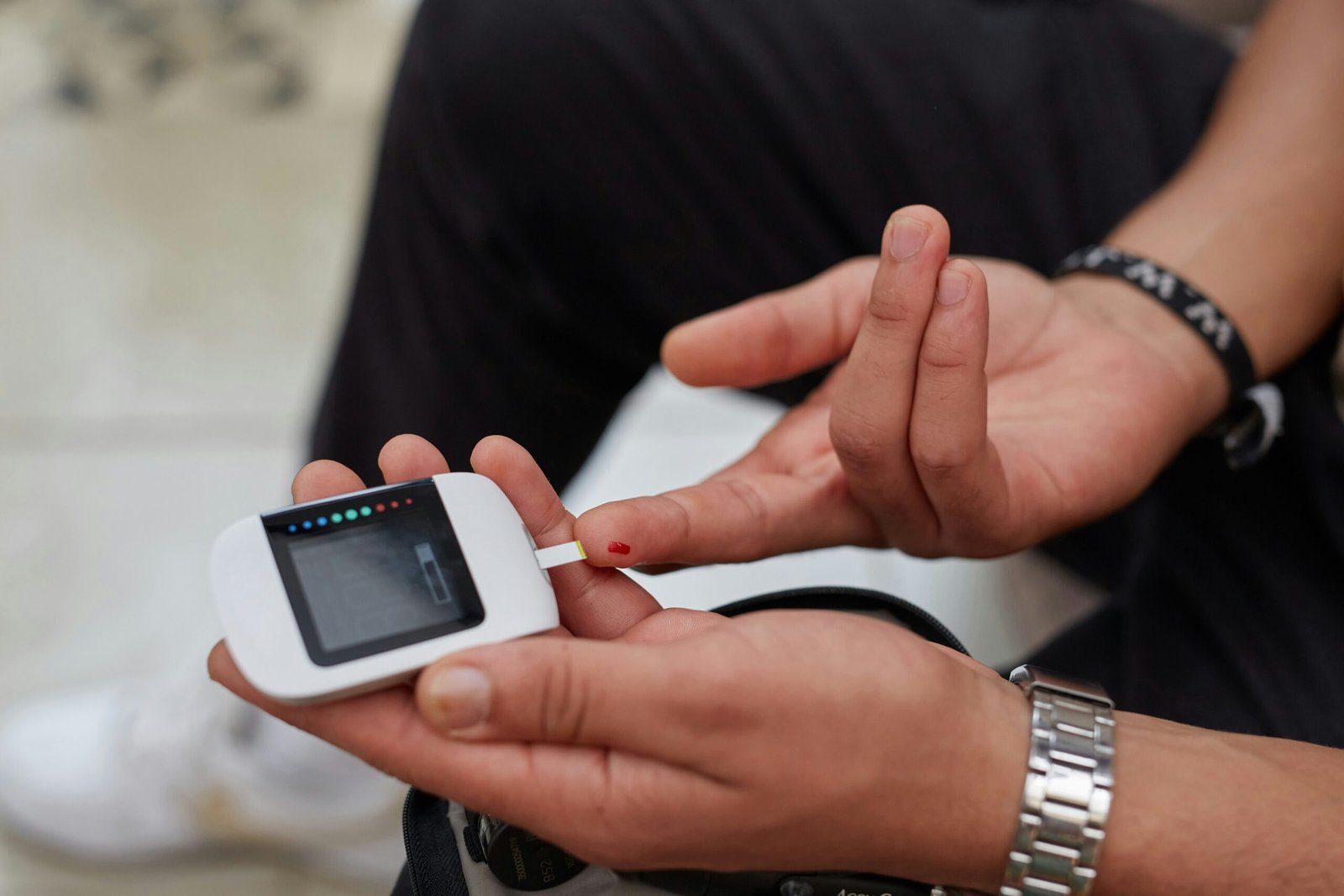
If you live with diabetes, you have probably wondered whether a life insurance company will even take you seriously — or whether the price will be so high it is not worth applying. It is one of the most common worries we hear, and it is usually based on outdated information. More than 40 million Americans are living with diabetes, according to the Centers for Disease Control and Prevention, which means underwriters see this condition every single day. Far from being a dealbreaker, well-managed diabetes is a case that the right carrier is comfortable insuring.
Over 27 years and more than 17,000 clients served, our independent agency has placed coverage for people with Type 1 diabetes, Type 2 diabetes, insulin-dependent cases, and applicants who had already been declined elsewhere. This guide explains how underwriters actually think about diabetes, what separates a Type 1 case from a Type 2 case, what you can realistically expect to pay, and the concrete steps that move you into a better rate class.
In most cases, yes. Diabetes is not an automatic decline — it is a rated condition, which is underwriting language for "we can insure this, and here is how we price the added risk." The vast majority of people with diabetes who apply through an experienced agent qualify for a fully underwritten policy. Those who do not qualify for standard coverage almost always have a guaranteed-acceptance or simplified-issue option available, so it is genuinely rare for someone to walk away with no path to protection at all.
What changes is not whether you can get covered but the price and the rate class you land in. And because we are an independent agency that compares more than 80 carriers rather than representing a single company, we can shop your exact profile to the insurers that treat diabetes most favorably — a difference that often matters more than anything else in the whole process.
Underwriting is the process of estimating how a health condition affects life expectancy, then translating that estimate into a rate class. For diabetes, an underwriter is not reacting to the word "diabetes" on your application — they are building a picture from several specific data points pulled from your application, your medical records, and often a lab-tested exam.
The main factors that shape a diabetic applicant's offer include: your A1C level (a blood test showing your average blood sugar over roughly three months); whether you have Type 1 or Type 2 diabetes; your age at diagnosis and how long you have had the condition; whether you use insulin and how it is managed; and the presence or absence of diabetes-related complications such as kidney disease, neuropathy, retinopathy, or cardiovascular issues. Underwriters also weigh the same general factors they consider for everyone — build, blood pressure, cholesterol, tobacco use, and family history — because those either compound or offset the diabetes risk.
Of all these factors, A1C tends to carry the most weight, because it is an objective, recent snapshot of how well your diabetes is actually controlled. A person with an A1C in the mid-6s is demonstrating tight control and a lower long-term risk profile; a person consistently in the 9s is signaling the opposite. Two applicants with the same diagnosis can receive dramatically different offers based on this single number, which is why the months leading up to your application genuinely matter. Underwriters generally want to see a stable, well-controlled pattern rather than a single good reading, so consistency over the prior six to twelve months works in your favor.
This is the question we get most often, and the honest answer is that the two types are underwritten quite differently — though both are insurable.
Type 2 is by far the most common form, accounting for the large majority of the more than 40 million diabetes cases the American Diabetes Association tracks. It is also the type that tends to earn the friendliest offers. A person with well-controlled, non-insulin-dependent Type 2 diabetes, a healthy build, and no complications can often qualify for a Standard or even Standard Plus rate class — and in some cases, older applicants who are diet- and medication-controlled with excellent numbers can reach Preferred tiers with certain carriers. Because Type 2 is frequently diagnosed later in life and is often managed with lifestyle and oral medication, underwriters view a controlled case as a manageable, well-understood risk.
Type 1 is an autoimmune condition, usually diagnosed earlier in life, and always insulin-dependent. Because of the longer disease duration and insulin requirement, Type 1 cases are more often priced with what the industry calls a table rating — an offer that sits above the standard rate. A table rating adds a set percentage on top of the standard premium, commonly in the range of roughly 25% to 100% or more, depending on control and complications. That sounds intimidating, but a rated offer is still a real, permanent policy that pays a full death benefit; it simply reflects the additional risk. Well-controlled Type 1 applicants who manage their A1C carefully and avoid complications routinely secure coverage at reasonable, predictable prices.
Price depends on your age, coverage amount, type of policy, tobacco use, and — above all — your control and overall health. The table below shows illustrative monthly premium ranges to give you a feel for how A1C and rate class interact. These are estimates for educational purposes only, based on published market data for a healthy-weight, non-smoking applicant on a 20-year, $500,000 term policy. They are not quotes, offers, or promises — your actual rate can only be determined by applying and being underwritten.
| A1C range (well-documented) | Typical rate class | Est. monthly premium, age 40 | Est. monthly premium, age 55 |
|---|---|---|---|
| No diabetes (reference) | Preferred / Standard | ~$30–$45 | ~$90–$130 |
| Under 6.5 | Standard Plus | ~$45–$60 | ~$120–$160 |
| 6.5–7.0 | Standard | ~$50–$75 | ~$140–$190 |
| 7.0–7.5 | Table 2 (approx. +50%) | ~$75–$110 | ~$200–$270 |
| 7.5–8.5 | Table 4–6 (approx. +100–150%) | ~$105–$155 | ~$280–$400 |
| Consistently 9.0+ / complications | Higher table rating or guaranteed-issue alternative | Varies widely | Varies widely |
Two things stand out in numbers like these. First, the jump from "controlled" to "poorly controlled" is much larger than the jump caused by having diabetes at all — which is exactly why the effort to lower your A1C pays off in dollars. Second, at the same age and A1C, a Type 1 applicant will typically land a notch or two higher on the table-rating scale than a Type 2 applicant, reflecting the longer disease duration and insulin dependence.
When a health condition like diabetes affects your offer, you are shopping in what agents call the high-risk life insurance (also called impaired risk life insurance) market. This is a specialized corner of the industry, and it is where the choice of carrier makes an enormous difference. Every insurer publishes its own underwriting guidelines, and those guidelines treat diabetes very differently. One carrier might cap a well-controlled Type 2 applicant at a table rating; another might offer that same person a Standard rate outright. One company might decline an insulin-dependent applicant over a certain age; a diabetes-friendly specialist might welcome the case.
This is the single biggest reason working with an independent agency beats going straight to one company's website. A captive agent can only offer you their own carrier's answer. Because we compare 80-plus carriers, we can match your specific numbers — your type, your A1C, your age, your medications — to the insurer most likely to reward them, rather than accepting the first offer that comes back. For anyone with a pre-existing condition, that shopping process is often worth thousands of dollars over the life of a policy.
"I thought the life insurer would decline me because of my pre-existing health conditions. I was quite amazed when they approved me for the amount I wanted, and at a price that was reasonable." — Dennis H., Carlsbad, CA
You can read real reviews from our clients to see how these cases tend to play out in practice.
Three beliefs stop people from applying — and all three are largely myths.
Diabetes is a rated condition, not a disqualifying one. Outright declines are usually driven by uncontrolled diabetes combined with serious complications, not by the diagnosis itself. The applicant who takes their medication, monitors their A1C, and applies through an agent who knows which carriers to approach is very likely to receive a genuine offer.
Most people dramatically overestimate the cost of life insurance in general — and diabetics overestimate it even more. Research from LIMRA found that younger adults overestimate the price of a basic term policy by roughly ten to twelve times its actual cost. When you see the illustrative ranges above, a controlled diabetic in their 40s is often paying a modest amount more than a non-diabetic, not several times more.
Guaranteed-issue policies have their place, but they are usually the most expensive coverage per dollar of benefit, they cap the death benefit at a low amount (often around $25,000–$30,000), and they typically include a two- or three-year waiting period before the full benefit is payable. For a healthy-weight diabetic with decent control, a fully underwritten policy will almost always deliver far more coverage for the money. Guaranteed issue should be a fallback, not a first stop.
If uncontrolled diabetes or complications put a traditional policy out of reach today, you still have real choices. Simplified-issue policies ask a handful of health questions with no medical exam and can approve many diabetics at moderate coverage amounts. Guaranteed-issue policies accept virtually everyone regardless of health, in exchange for a smaller benefit and a graded waiting period — often a sensible way to cover funeral and final expenses. Many people in this situation are a good fit for a final expense policy designed specifically to cover burial and end-of-life costs. And if your employer offers group life insurance, that coverage is typically guaranteed up to a limit with no individual underwriting, so it is always worth maximizing what is available there. The right move is often a combination — securing what you qualify for now, then revisiting a fully underwritten policy after you have improved your control. If you live in California, our California diabetes life insurance page walks through these same options with a local lens.
You have more influence over your offer than most people realize. Use this checklist before and during your application:
1. Get your A1C documented and trending down. A stable, well-controlled A1C over the prior six to twelve months is the most powerful lever you control. If yours is borderline, it can be worth working with your doctor to improve it before you apply.
2. Keep proof of good management. Regular doctor visits, current lab work, and a clear medication routine all tell the underwriter your diabetes is being actively managed rather than ignored.
3. Address the factors around the diabetes. Weight, blood pressure, cholesterol, and tobacco use all stack on top of the diabetes rating. Improving any of them can move you up a rate class. If heart health is also part of your picture, our guide on life insurance with heart disease and high cholesterol explains how those conditions are rated alongside diabetes.
4. Know your numbers before you apply. Be ready to state your type, your diagnosis date, your current medications, your most recent A1C, and any complications. Accuracy prevents surprises and helps your agent target the right carrier the first time.
5. Shop the case — don't accept the first offer. This is the step most people skip. The same profile can be priced a full rate class apart at two different carriers, so comparing the diabetes-friendly insurers is where the real savings live. This is precisely what an independent agency does for you.
6. Apply, then revisit. If you take a rated offer today, you are not locked in forever. If your control improves substantially, many carriers will consider a reconsideration request to lower your rating, and you can always shop for a better replacement policy down the road.
Diabetes changes the conversation about life insurance, but it very rarely ends it. With the right preparation and the right carrier, the coverage your family needs is almost always within reach — often for far less than you would expect.
Every diabetic case is different, and the only way to know your real number is to have someone who does this every day match your profile to the right carriers. As an independent agency with 27 years of experience, 17,000-plus clients served, and 80-plus carriers to compare — including specialists who treat diabetes favorably — we can shop your exact situation instead of handing you one company's answer.
Get My Rates Now → or call us directly at (310) 478-6395 for a no-pressure conversation about your options. Whether you have Type 1, Type 2, or have already been declined elsewhere, we will tell you honestly where you stand.
This article is general information, not financial, tax, or medical advice; underwriting outcomes vary by carrier and individual circumstances.
By Brandon D. Sears, CLU® (Chartered Life Underwriter)
If you live with diabetes, you have probably wondered whether a life insurance company will even take you seriously — or whether the price will be so high it is not worth applying. It is one of the most common worries we hear, and it is usually based on outdated information. More than 40 million Americans are living with diabetes, according to the Centers for Disease Control and Prevention, which means underwriters see this condition every single day. Far from being a dealbreaker, well-managed diabetes is a case that the right carrier is comfortable insuring.
Over 27 years and more than 17,000 clients served, our independent agency has placed coverage for people with Type 1 diabetes, Type 2 diabetes, insulin-dependent cases, and applicants who had already been declined elsewhere. This guide explains how underwriters actually think about diabetes, what separates a Type 1 case from a Type 2 case, what you can realistically expect to pay, and the concrete steps that move you into a better rate class.
In most cases, yes. Diabetes is not an automatic decline — it is a rated condition, which is underwriting language for "we can insure this, and here is how we price the added risk." The vast majority of people with diabetes who apply through an experienced agent qualify for a fully underwritten policy. Those who do not qualify for standard coverage almost always have a guaranteed-acceptance or simplified-issue option available, so it is genuinely rare for someone to walk away with no path to protection at all.
What changes is not whether you can get covered but the price and the rate class you land in. And because we are an independent agency that compares more than 80 carriers rather than representing a single company, we can shop your exact profile to the insurers that treat diabetes most favorably — a difference that often matters more than anything else in the whole process.
Underwriting is the process of estimating how a health condition affects life expectancy, then translating that estimate into a rate class. For diabetes, an underwriter is not reacting to the word "diabetes" on your application — they are building a picture from several specific data points pulled from your application, your medical records, and often a lab-tested exam.
The main factors that shape a diabetic applicant's offer include: your A1C level (a blood test showing your average blood sugar over roughly three months); whether you have Type 1 or Type 2 diabetes; your age at diagnosis and how long you have had the condition; whether you use insulin and how it is managed; and the presence or absence of diabetes-related complications such as kidney disease, neuropathy, retinopathy, or cardiovascular issues. Underwriters also weigh the same general factors they consider for everyone — build, blood pressure, cholesterol, tobacco use, and family history — because those either compound or offset the diabetes risk.
Of all these factors, A1C tends to carry the most weight, because it is an objective, recent snapshot of how well your diabetes is actually controlled. A person with an A1C in the mid-6s is demonstrating tight control and a lower long-term risk profile; a person consistently in the 9s is signaling the opposite. Two applicants with the same diagnosis can receive dramatically different offers based on this single number, which is why the months leading up to your application genuinely matter. Underwriters generally want to see a stable, well-controlled pattern rather than a single good reading, so consistency over the prior six to twelve months works in your favor.
This is the question we get most often, and the honest answer is that the two types are underwritten quite differently — though both are insurable.
Type 2 is by far the most common form, accounting for the large majority of the more than 40 million diabetes cases the American Diabetes Association tracks. It is also the type that tends to earn the friendliest offers. A person with well-controlled, non-insulin-dependent Type 2 diabetes, a healthy build, and no complications can often qualify for a Standard or even Standard Plus rate class — and in some cases, older applicants who are diet- and medication-controlled with excellent numbers can reach Preferred tiers with certain carriers. Because Type 2 is frequently diagnosed later in life and is often managed with lifestyle and oral medication, underwriters view a controlled case as a manageable, well-understood risk.
Type 1 is an autoimmune condition, usually diagnosed earlier in life, and always insulin-dependent. Because of the longer disease duration and insulin requirement, Type 1 cases are more often priced with what the industry calls a table rating — an offer that sits above the standard rate. A table rating adds a set percentage on top of the standard premium, commonly in the range of roughly 25% to 100% or more, depending on control and complications. That sounds intimidating, but a rated offer is still a real, permanent policy that pays a full death benefit; it simply reflects the additional risk. Well-controlled Type 1 applicants who manage their A1C carefully and avoid complications routinely secure coverage at reasonable, predictable prices.
Price depends on your age, coverage amount, type of policy, tobacco use, and — above all — your control and overall health. The table below shows illustrative monthly premium ranges to give you a feel for how A1C and rate class interact. These are estimates for educational purposes only, based on published market data for a healthy-weight, non-smoking applicant on a 20-year, $500,000 term policy. They are not quotes, offers, or promises — your actual rate can only be determined by applying and being underwritten.
| A1C range (well-documented) | Typical rate class | Est. monthly premium, age 40 | Est. monthly premium, age 55 |
|---|---|---|---|
| No diabetes (reference) | Preferred / Standard | ~$30–$45 | ~$90–$130 |
| Under 6.5 | Standard Plus | ~$45–$60 | ~$120–$160 |
| 6.5–7.0 | Standard | ~$50–$75 | ~$140–$190 |
| 7.0–7.5 | Table 2 (approx. +50%) | ~$75–$110 | ~$200–$270 |
| 7.5–8.5 | Table 4–6 (approx. +100–150%) | ~$105–$155 | ~$280–$400 |
| Consistently 9.0+ / complications | Higher table rating or guaranteed-issue alternative | Varies widely | Varies widely |
Two things stand out in numbers like these. First, the jump from "controlled" to "poorly controlled" is much larger than the jump caused by having diabetes at all — which is exactly why the effort to lower your A1C pays off in dollars. Second, at the same age and A1C, a Type 1 applicant will typically land a notch or two higher on the table-rating scale than a Type 2 applicant, reflecting the longer disease duration and insulin dependence.
When a health condition like diabetes affects your offer, you are shopping in what agents call the high-risk life insurance (also called impaired risk life insurance) market. This is a specialized corner of the industry, and it is where the choice of carrier makes an enormous difference. Every insurer publishes its own underwriting guidelines, and those guidelines treat diabetes very differently. One carrier might cap a well-controlled Type 2 applicant at a table rating; another might offer that same person a Standard rate outright. One company might decline an insulin-dependent applicant over a certain age; a diabetes-friendly specialist might welcome the case.
This is the single biggest reason working with an independent agency beats going straight to one company's website. A captive agent can only offer you their own carrier's answer. Because we compare 80-plus carriers, we can match your specific numbers — your type, your A1C, your age, your medications — to the insurer most likely to reward them, rather than accepting the first offer that comes back. For anyone with a pre-existing condition, that shopping process is often worth thousands of dollars over the life of a policy.
"I thought the life insurer would decline me because of my pre-existing health conditions. I was quite amazed when they approved me for the amount I wanted, and at a price that was reasonable." — Dennis H., Carlsbad, CA
You can read real reviews from our clients to see how these cases tend to play out in practice.
Three beliefs stop people from applying — and all three are largely myths.
Diabetes is a rated condition, not a disqualifying one. Outright declines are usually driven by uncontrolled diabetes combined with serious complications, not by the diagnosis itself. The applicant who takes their medication, monitors their A1C, and applies through an agent who knows which carriers to approach is very likely to receive a genuine offer.
Most people dramatically overestimate the cost of life insurance in general — and diabetics overestimate it even more. Research from LIMRA found that younger adults overestimate the price of a basic term policy by roughly ten to twelve times its actual cost. When you see the illustrative ranges above, a controlled diabetic in their 40s is often paying a modest amount more than a non-diabetic, not several times more.
Guaranteed-issue policies have their place, but they are usually the most expensive coverage per dollar of benefit, they cap the death benefit at a low amount (often around $25,000–$30,000), and they typically include a two- or three-year waiting period before the full benefit is payable. For a healthy-weight diabetic with decent control, a fully underwritten policy will almost always deliver far more coverage for the money. Guaranteed issue should be a fallback, not a first stop.
If uncontrolled diabetes or complications put a traditional policy out of reach today, you still have real choices. Simplified-issue policies ask a handful of health questions with no medical exam and can approve many diabetics at moderate coverage amounts. Guaranteed-issue policies accept virtually everyone regardless of health, in exchange for a smaller benefit and a graded waiting period — often a sensible way to cover funeral and final expenses. Many people in this situation are a good fit for a final expense policy designed specifically to cover burial and end-of-life costs. And if your employer offers group life insurance, that coverage is typically guaranteed up to a limit with no individual underwriting, so it is always worth maximizing what is available there. The right move is often a combination — securing what you qualify for now, then revisiting a fully underwritten policy after you have improved your control. If you live in California, our California diabetes life insurance page walks through these same options with a local lens.
You have more influence over your offer than most people realize. Use this checklist before and during your application:
1. Get your A1C documented and trending down. A stable, well-controlled A1C over the prior six to twelve months is the most powerful lever you control. If yours is borderline, it can be worth working with your doctor to improve it before you apply.
2. Keep proof of good management. Regular doctor visits, current lab work, and a clear medication routine all tell the underwriter your diabetes is being actively managed rather than ignored.
3. Address the factors around the diabetes. Weight, blood pressure, cholesterol, and tobacco use all stack on top of the diabetes rating. Improving any of them can move you up a rate class. If heart health is also part of your picture, our guide on life insurance with heart disease and high cholesterol explains how those conditions are rated alongside diabetes.
4. Know your numbers before you apply. Be ready to state your type, your diagnosis date, your current medications, your most recent A1C, and any complications. Accuracy prevents surprises and helps your agent target the right carrier the first time.
5. Shop the case — don't accept the first offer. This is the step most people skip. The same profile can be priced a full rate class apart at two different carriers, so comparing the diabetes-friendly insurers is where the real savings live. This is precisely what an independent agency does for you.
6. Apply, then revisit. If you take a rated offer today, you are not locked in forever. If your control improves substantially, many carriers will consider a reconsideration request to lower your rating, and you can always shop for a better replacement policy down the road.
Diabetes changes the conversation about life insurance, but it very rarely ends it. With the right preparation and the right carrier, the coverage your family needs is almost always within reach — often for far less than you would expect.
Every diabetic case is different, and the only way to know your real number is to have someone who does this every day match your profile to the right carriers. As an independent agency with 27 years of experience, 17,000-plus clients served, and 80-plus carriers to compare — including specialists who treat diabetes favorably — we can shop your exact situation instead of handing you one company's answer.
Get My Rates Now → or call us directly at (310) 478-6395 for a no-pressure conversation about your options. Whether you have Type 1, Type 2, or have already been declined elsewhere, we will tell you honestly where you stand.
This article is general information, not financial, tax, or medical advice; underwriting outcomes vary by carrier and individual circumstances.
